Consignment
Wedding Dress Consignment: How It Works and How to Stay Safe
How wedding dress consignment works, what shops usually take, what to put in the agreement and how to protect your gown and your payout.
In this guide
- What consignment means in practice
- Work out what you will actually receive
- What to check in the consignment agreement
- Document the gown before you hand it over
- Think about timing
- How to stay safe as a consignor
- When consignment is not the right choice
- What happens if the gown does not sell
- Consignment compared with a private sale
- Protect yourself from scams
Consignment means a shop sells your gown and pays you a share of the price, while you keep ownership until it sells. It works well for brides who want to recover part of their cost, and for anyone selling a gown that is still in excellent condition. The risks sit in the contract, so read the terms before you hand over a dress.
What consignment means in practice
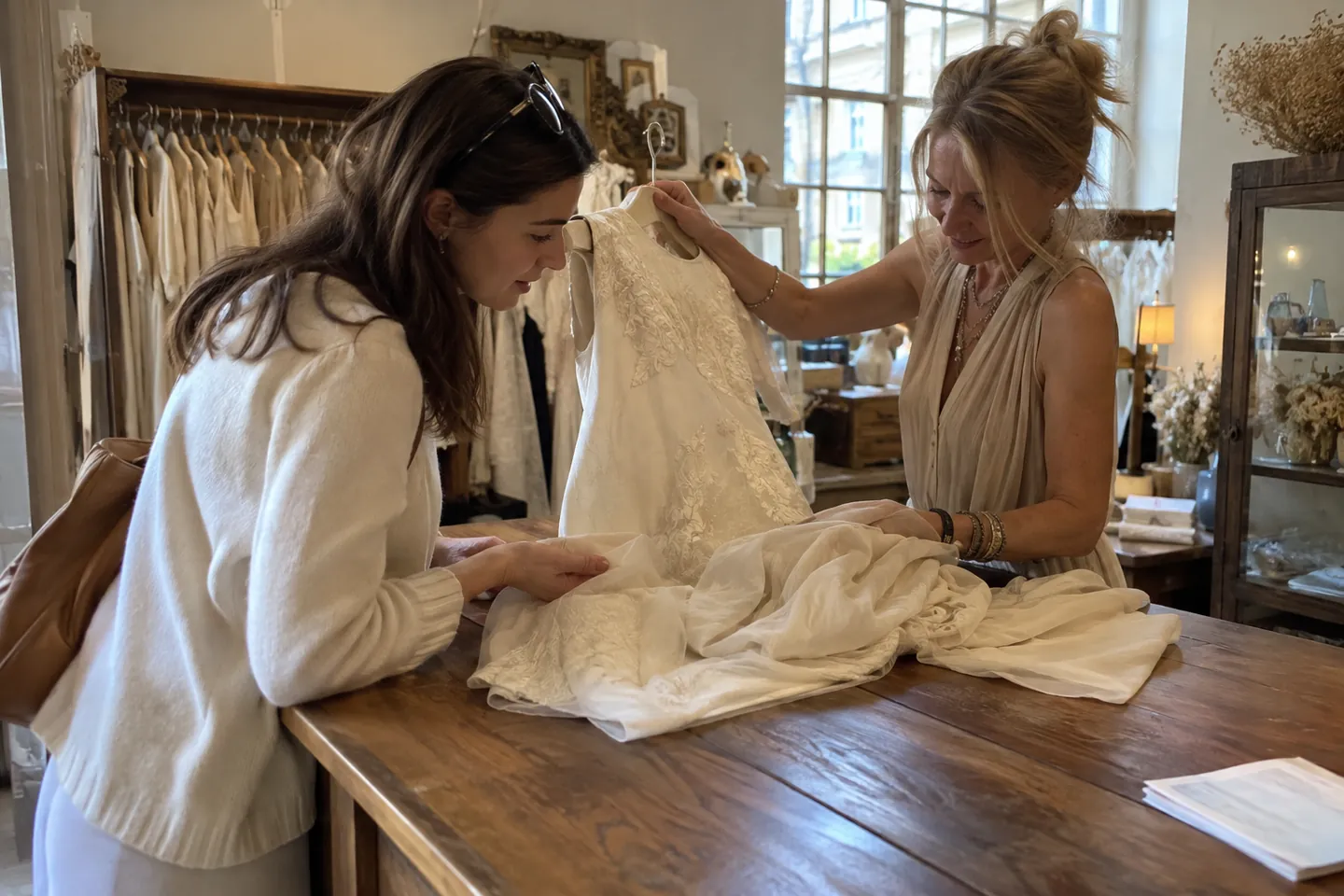
The owner of the gown places it with a shop. The shop lists it, displays it and handles buyers. When a sale happens, the shop keeps its agreed share and pays the owner the rest, usually after a set period. If the gown does not sell within the agreed term, it is returned to the owner or, in some shops, donated or sold at a lower price if you agreed to that in writing.
Shops commonly keep a large share of the sale price, and that share varies by shop and by price band. Some charge an upfront fee or a listing fee as well. Compare the percentage, the fees and the payment schedule across shops before you choose one.
Work out what you will actually receive
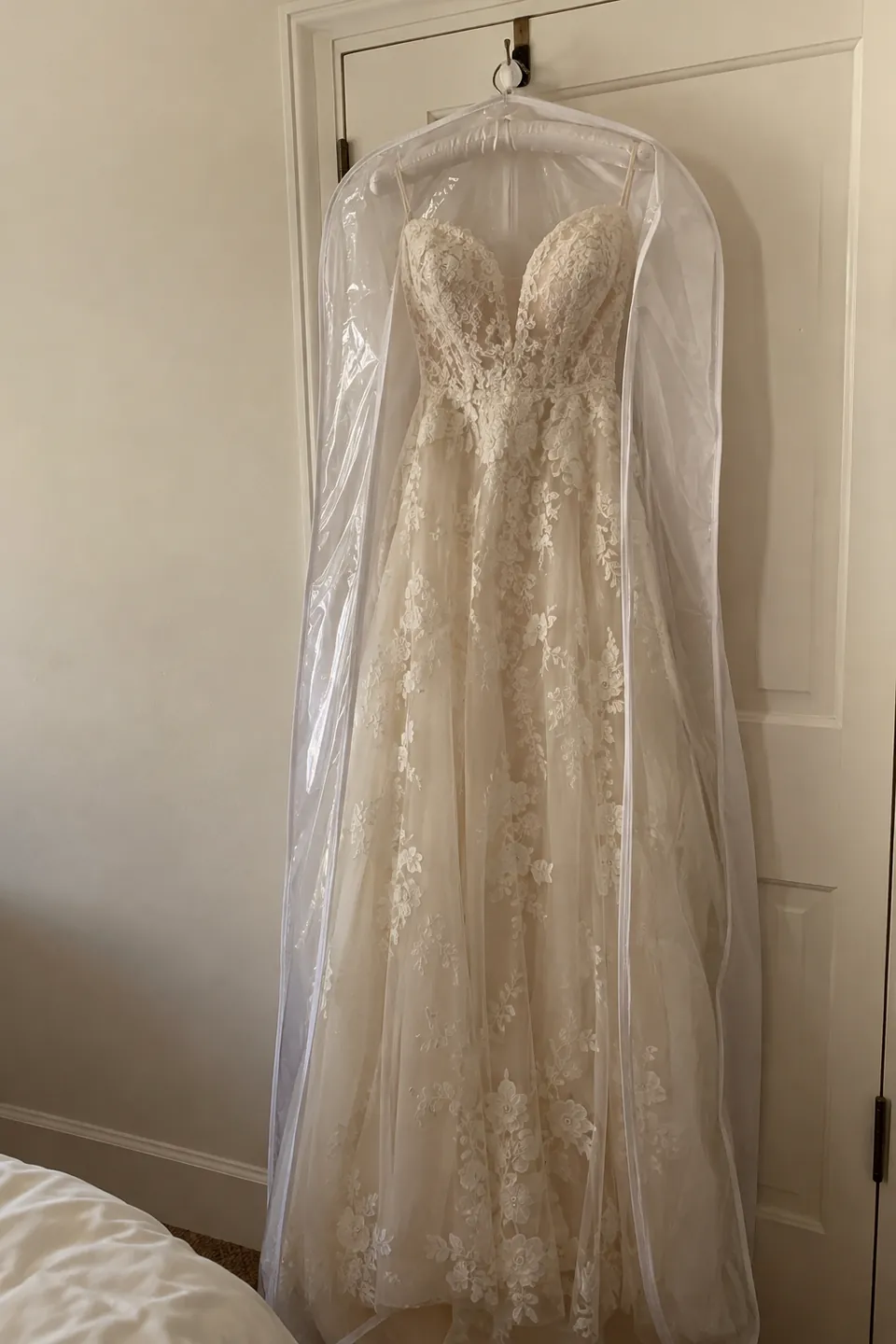
Start from the price you hope to get, then subtract the shop's share and any fees. A gown that sells for 800 dollars with a 50 percent shop share pays you 400 dollars before fees. A gown that sells for 300 dollars with the same share pays 150 dollars. Be realistic about the price: a gown is worth what a buyer will pay in the current market, not what you paid for it.
Consignment payout calculator
An illustration only. Use the exact share and fees from your agreement.
What to check in the consignment agreement
A clear agreement protects both sides. Before you sign, make sure it states:
- The shop's percentage and every fee, in writing, with the sale price band it applies to
- The length of the consignment period, and what happens at the end of it
- How and when you are paid, and by what method
- Who is responsible if the gown is damaged, stained or lost while in the shop
- Whether the shop can change the price, and whether it will tell you before doing so
- How you collect the gown if it does not sell, and whether there is a collection fee
- How the shop checks the gown's condition and authenticity when it arrives
Keep a copy of the signed agreement, the description of the gown and the photos the shop took.
Document the gown before you hand it over
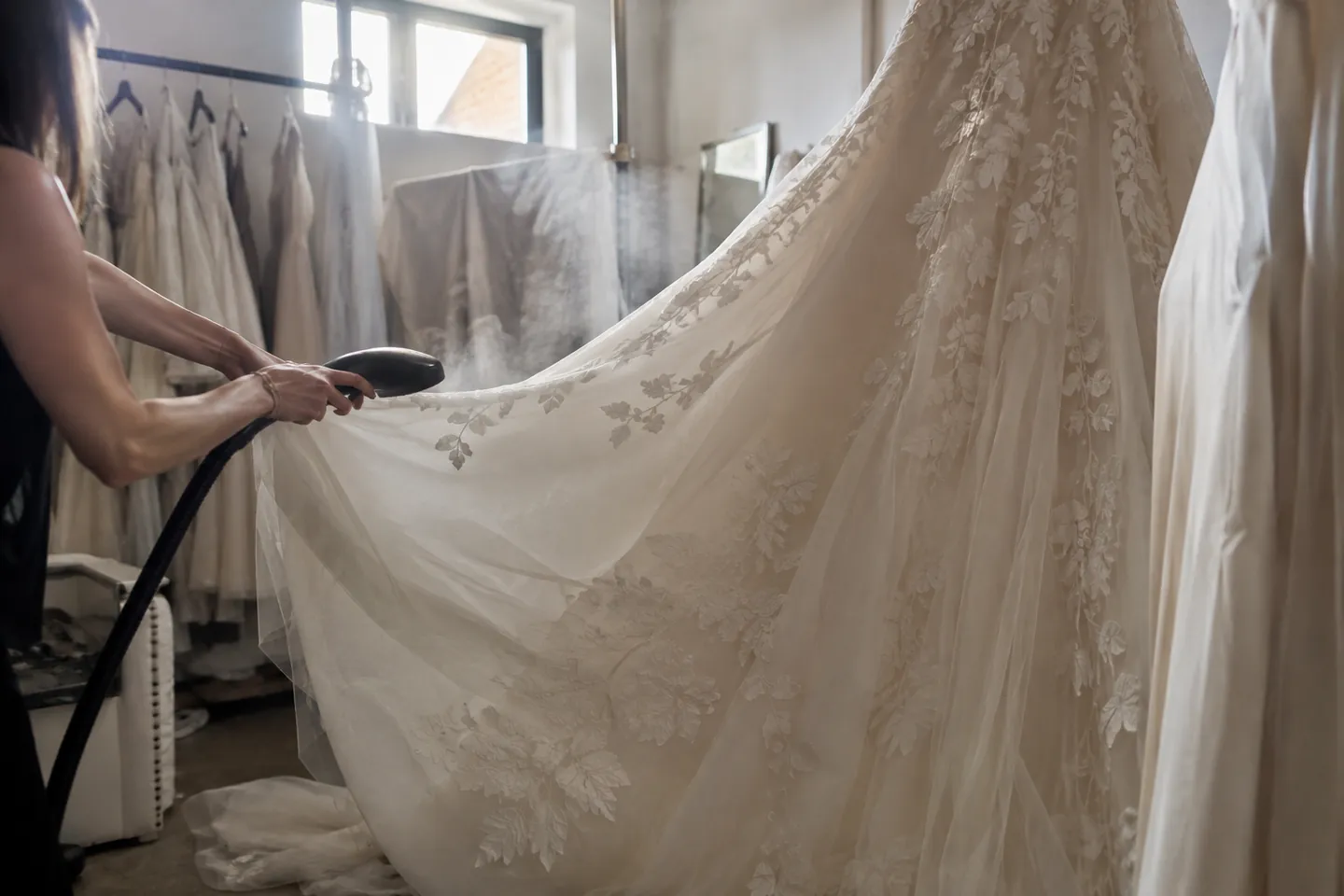
Photograph the gown in daylight from the front, back and side, with close-ups of the bodice, the hem, the label and any beading. Note any repairs, marks or known flaws. This protects you if a dispute arises about the condition when it came back. Ask the shop to sign or confirm the condition note when the gown is handed over.
Bring the original garment bag, any hangers, the veil and any belt or accessory that came with the gown. A gown that looks complete sells faster and at a better price.
Think about timing
Gowns sell best in the months before the main wedding season, when brides are shopping. Consignment periods are often three to six months, so plan the timing with that in mind. If you need the money by a certain date, ask the shop how long a typical gown takes to sell in your price range.
How to stay safe as a consignor
Use shops that have a physical address, a long trading history and reviews you can check on several platforms. Ask how they store gowns, whether they clean them, and whether they insure them. Be cautious with any shop that asks for an upfront payment to list a gown, or that asks you to send money to a bank account before a sale has been made.
Never send a gown by post to a shop you have not met unless you have a written agreement and a tracked service. If a shop will not show you its contract before you sign, leave.
When consignment is not the right choice
If your gown is badly stained, very old, or heavily altered in a way that limits resale, consignment may not pay enough to justify the time. In that case, a private sale or a donation may suit you better. A gown that needs repair may also cost more to fix than the shop will pay, so ask for a valuation before you decide.
What happens if the gown does not sell
Most gowns do not sell in the first few weeks. Before the consignment period ends, ask the shop whether it has lowered the price, moved the gown to a different display, or sent it to another buyer. A reasonable shop will tell you what it has done and why. If the gown has not sold at the end of the term, the agreement decides what happens next. Some shops return the gown, some ask you to collect it, and some keep it for an agreed further period at a lower price.
If you are asked to lower the price, check the new figure against the sale prices of similar gowns, and remember that your share falls with the price. A gown that drops by a quarter may leave you with less money in total if the shop keeps its percentage on a smaller sale.
Collect the gown promptly if it is returned. Check it for damage, and compare its condition with your photos and the signed note. If something has changed, say so in writing on the day you collect it.
Consignment compared with a private sale
A private sale through a classified listing or a bridal group can pay more, because you keep the whole price. It also takes more time. You handle the questions, the fittings for the buyer, the payment and the risk of a chargeback or a scam. Consignment costs more in percentage terms, but a shop does the selling and the presentation for you.
Some sellers combine the two, listing the gown privately first and moving it to a shop if it does not sell after a set date. Decide before you begin, because a gown that is already on a shop's rail is harder to take back to a private sale.
Protect yourself from scams
Be careful with buyers who want to pay more than the price, who ask for a refund to a different account, or who pay with a cheque for more than the sale amount and ask you to send the difference back. These are common scam patterns. Use a payment method that can be traced, and do not release the gown until the funds have cleared.
Frequently asked questions
How much do wedding dress consignment shops take?
The share varies by shop and by price band. Ask for the percentage in writing, and check whether there are listing or handling fees in addition to the share.
How long does a consigned wedding dress take to sell?
It depends on the style, size, condition and price. Many shops set a consignment period of three to six months. Ask the shop for its own average sale time before you agree.
Do I get paid if the dress does not sell?
No, not for a sale that did not happen. Check what the agreement says about returning the gown, lowering the price or donating it.
Can I set the price myself?
Often you can suggest a price, and the shop may accept or change it. Make sure the agreement says whether the shop can reduce the price and whether it must tell you first.
Should I choose a shop that asks for a fee up front?
Be careful. Legitimate shops usually take their share from the sale. An upfront payment is not a red flag on its own, but ask exactly what it covers and whether it is refundable.
Keep reading
Buying guide
How to Buy a Used Wedding Dress, Step by Step
Buying a used wedding dress? Check the condition, confirm the fit and history, judge the price fairly and ask the right questions before you pay.
7 min read
Alterations
Wedding Dress Alteration Costs and Timeline
How much wedding dress alterations usually cost, which changes are expensive, and how far ahead to book your fittings so the gown is ready on time.
6 min read

Budget
Wedding Dress Budget: How to Split the Money Wisely
Plan a wedding dress budget that covers the gown, alterations, veil, shoes, undergarments and a contingency, with a simple split you can adjust.
6 min read