Buying guide
How to Buy a Used Wedding Dress, Step by Step
Buying a used wedding dress? Check the condition, confirm the fit and history, judge the price fairly and ask the right questions before you pay.
In this guide
- Start with garment measurements, not the size tag
- Inspect the fabric and seams
- Check for stains, yellowing and odour
- Look at the structure and hardware
- Ask the seller these questions
- Judge the price against the whole outfit
- Watch for counterfeit and misdescribed gowns
- Plan the alterations before you buy
- Common mistakes buyers make
- Red flags that mean walk away
- How to write down what you agreed
A used wedding dress can cost a third of a new one, but the savings only hold if the gown is sound, fits after alterations and comes with a clear written promise from the seller. Work through the steps below in order, and walk away from any gown you cannot inspect in good light.
Start with garment measurements, not the size tag
Size labels change between designers and decades. A size 10 from one maker can cut like a 12 from another, so the label alone tells you little. Measure yourself first: bust at the fullest point, underbust, natural waist, hips, and the height you will wear your shoes at.
Then ask the seller for the flat-lay measurements of the gown itself: bust, waist, hip, and length from the top of the bodice to the floor. Compare those numbers with your own. A gown can usually be taken in or let out a little. Large gaps at the bust are the hardest to fix on a fitted bodice, and a bodice that pulls across the bust will look wrong no matter how well the skirt is tailored.
Inspect the fabric and seams
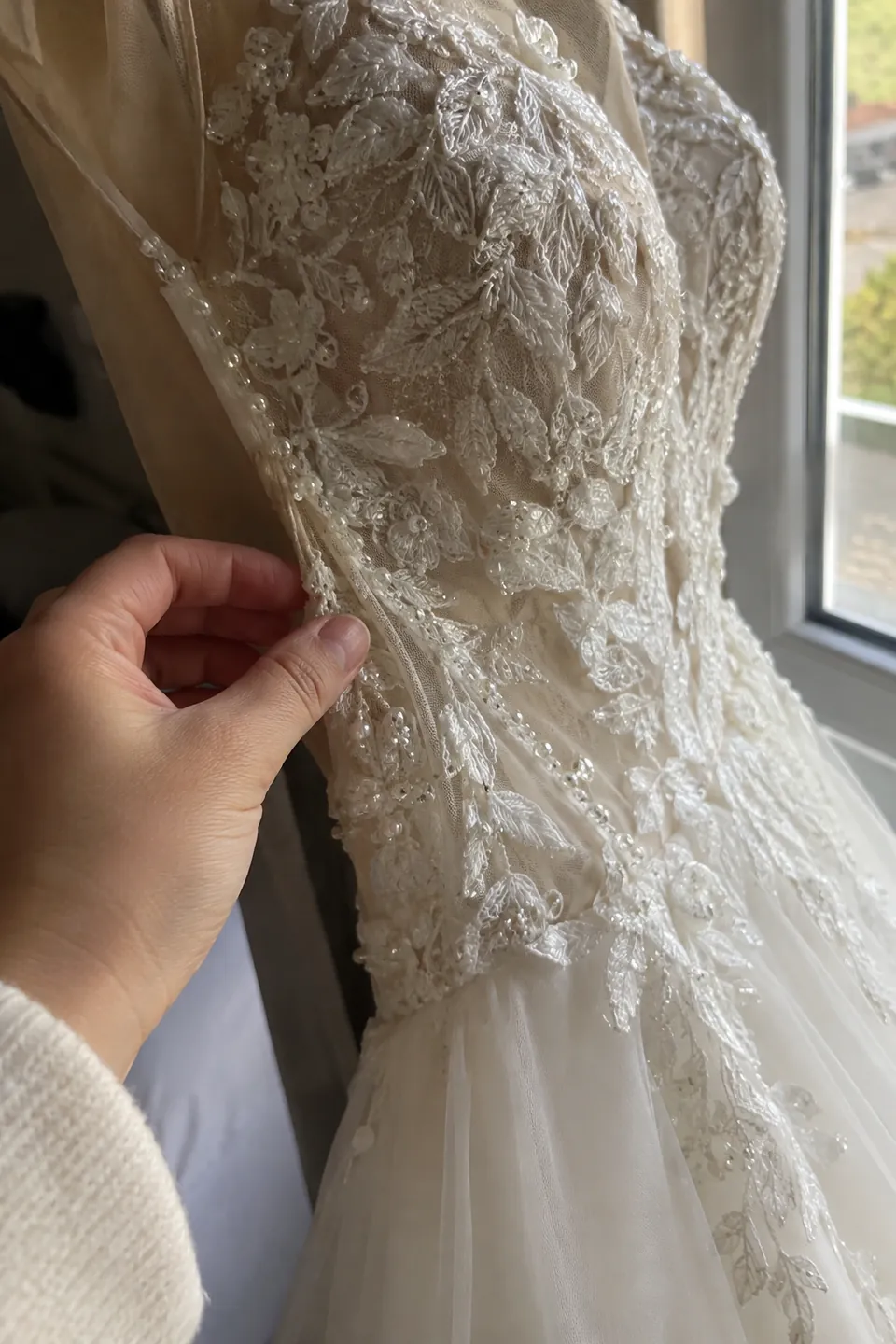
Hold the gown near a window, not under a warm spotlight, which hides damage. Run your fingers along the seams, especially under the arms and at the side seams where stress collects. Look for:
- Loose or broken threads, and seams that have been opened and resewn
- Thin or worn spots on satin, which look like faded, shiny patches
- Pulled lace, or lace that has lifted away from the net beneath it
- Beads or sequins missing in clusters, which is harder and more expensive to replace than a single bead
Stretch the fabric gently. Good satin and crepe spring back. Tulle that has gone limp or grey at the folds has been stored badly.
Used-gown inspection checklist
Tick each check as you go. Nothing is saved or sent.
Check for stains, yellowing and odour
Yellowing often means the gown was stored in the wrong place, folded for years, or exposed to light. Some yellowing lifts with professional cleaning and some does not, so ask for a cleaning quote before you commit. Ask about any stain you can see, and check the hem and the inside of the bodice where perspiration and makeup leave marks.
A musty smell is a sign of moisture or mildew. Do not buy a gown that smells of mould, even if the outside looks fine. Mildew damage can spread into the lining and bones.
Look at the structure and hardware
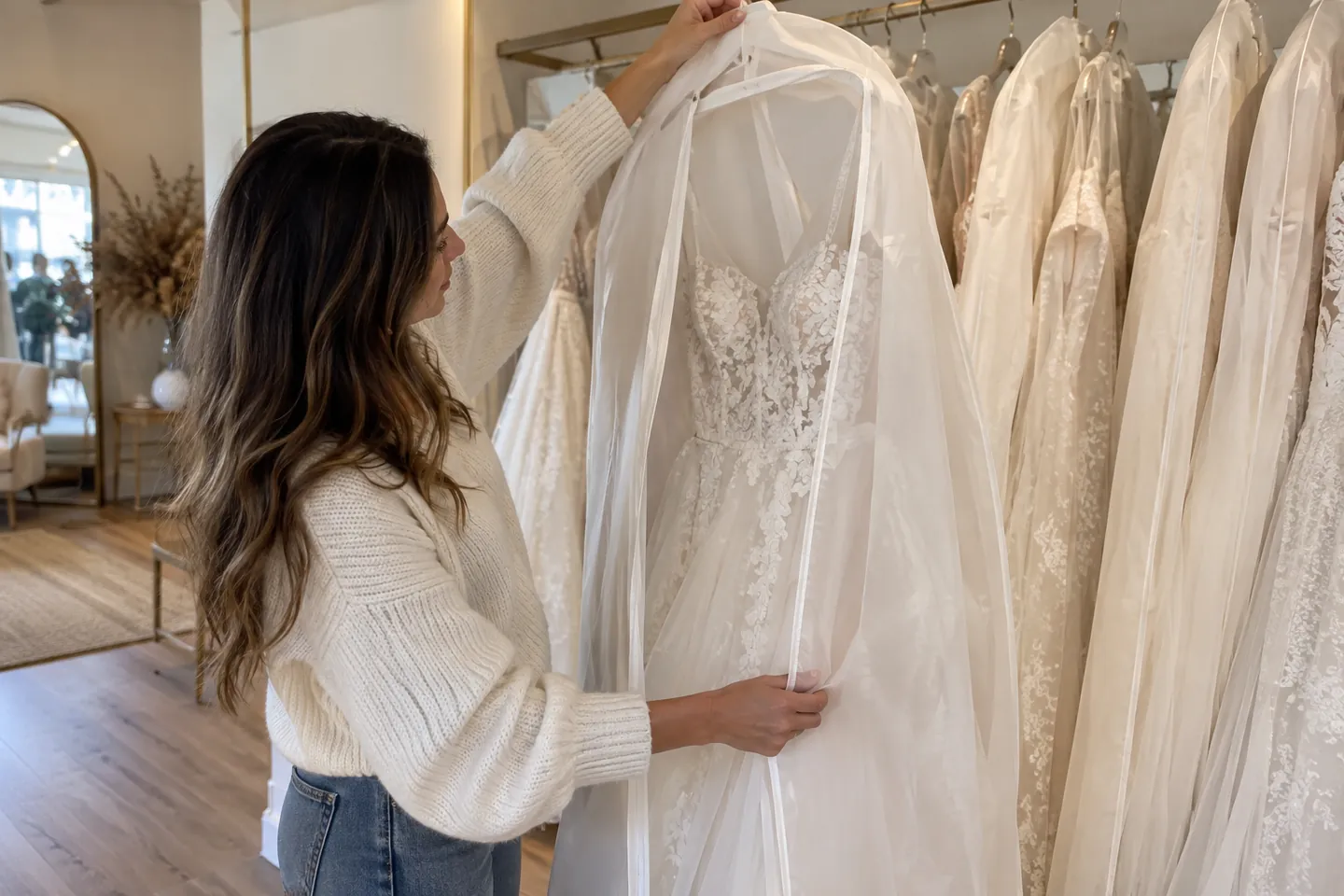
The structure matters as much as the fabric. On a fitted or corset-back gown, check:
- The boning and the channels that hold it, which should be straight and firm
- The zipper or lace-up back, the hooks and the eyes, and whether the tabs still hold
- Buttons and their loops, which often wear out first
- The bustle loops, if the skirt has a train, and whether they are reinforced
- The lining, which should be intact and not shredded at the hem
Hardware is cheap to replace, but a broken zipper on a silk gown can cost a lot to fix properly.
Ask the seller these questions
Write the answers down, or ask for them by email so you have a record:
- Has the gown been professionally cleaned, and when?
- Is it complete? Ask whether the veil, belt, petticoat or sleeves are included.
- Has it been repaired or altered before? Where?
- What is the return policy, and is it written on the receipt?
- Can I see the gown in natural light, and try it on before paying?
- Is the seller the owner, or an agent acting for the owner?
A seller who refuses to answer these is telling you something. An honest seller expects the questions.
Judge the price against the whole outfit
Compare the price with current listings for the same silhouette, fabric and condition. A used gown should cost clearly less than a new one of the same style, but the brand name alone is not proof of value. Popular designer names sometimes hold their price, and a plain gown from a less famous maker is often a better buy.
Price the whole outfit, not just the gown. Alterations, cleaning, the veil and the shoes add up quickly. Our budget planner shows how to split the money, and our alteration cost guide gives typical ranges for common changes.
Watch for counterfeit and misdescribed gowns
Designer labels are sometimes copied. Check the label stitching, the fabric weight and the hardware against photos from the brand's own site. If a deal looks too good for the gown described, ask for proof of purchase or the original receipt. A seller who is genuine can usually produce one.
Be careful with photos. Ask for close-ups of the label, the hem, the bodice and the back. Photos taken at night or with heavy filters can hide a stain or a colour shift.
Plan the alterations before you buy
Ask a seamstress to look at the gown before you buy if you can, because a quick fitting shows what can be changed and what cannot. Book your first fitting early. Most bridal alterations take several visits over two to four months, and rush fees are common.
Keep the gown in its original bag, out of direct light, until you need it. Our guide to caring for a wedding dress explains how to store it between fittings.
Common mistakes buyers make
The most expensive mistake is buying the gown you saw in one photo. Photos flatter satin and hide marks, so ask for the same gown in daylight, from the front, the back and the side. The second mistake is trusting the size label and skipping the flat measurements. The third is underestimating alterations. A gown that needs three changes to the bodice and the hem can cost as much as a second gown in a different size.
Buyers also forget the accessories. A veil, a belt or a petticoat that came with the gown should be listed in the receipt. If it is missing, ask whether it can be supplied or whether the price should come down. A gown without its original belt is not a bargain if you need to buy a replacement at full price.
Finally, many buyers do not ask what happens if the gown does not fit after alterations. Ask whether the seller will take it back, offer a credit, or refund part of the price. A clear answer in writing is worth more than a small discount.
Red flags that mean walk away
Some signs should end the purchase at once. A seller who will not show the gown in daylight, who refuses to name the previous owner's cleaning history, or who pressures you to pay by an untraceable method is not a safe buyer. So is a gown with a strong odour that is covered by perfume, a hem with unexplained patches, or a label that has been cut out. Walk away if any of these are present, even if the price is very low.
How to write down what you agreed
Once you decide, put the agreement in writing. Include the gown's style and colour, the size and the flat measurements you were given, the condition as described, any known flaws, the price, the return terms and the payment method. Photograph the gown before you take it home, and keep the photographs with the receipt. If the seller will not write anything down, that is a reason to think again.
Frequently asked questions
Is a used wedding dress hygienic to wear?
A gown that has been professionally cleaned and stored in a clean, dry place is safe to wear. Ask for the cleaning history, and have a bridal cleaner or dry cleaner check the fabric before the final fitting.
Can a used wedding dress be altered to fit?
Most can be taken in, let out or shortened. Bust and hip changes are the most limited, especially on structured or beaded gowns. Ask a seamstress for an opinion before you pay.
How long before the wedding should I buy?
Allow at least four months for alterations, and more if the gown has lace, beading or a complex bustle. Buying earlier gives you time to find a replacement if the first gown does not work.
Should I buy a gown I cannot try on?
Only with exact garment measurements, clear photos taken in daylight, and a written return right. If any of these is missing, buy a gown you can try on.
What if the gown has a small stain?
Ask for a cleaning quote and a professional opinion on whether the stain will lift. Do not assume a stain will come out, and do not pay a full price until you know.
Keep reading
Consignment
Wedding Dress Consignment: How It Works and How to Stay Safe
How wedding dress consignment works, what shops usually take, what to put in the agreement and how to protect your gown and your payout.
6 min read
Alterations
Wedding Dress Alteration Costs and Timeline
How much wedding dress alterations usually cost, which changes are expensive, and how far ahead to book your fittings so the gown is ready on time.
6 min read
Budget
Wedding Dress Budget: How to Split the Money Wisely
Plan a wedding dress budget that covers the gown, alterations, veil, shoes, undergarments and a contingency, with a simple split you can adjust.
6 min read