Alterations
Wedding Dress Alteration Costs and Timeline
How much wedding dress alterations usually cost, which changes are expensive, and how far ahead to book your fittings so the gown is ready on time.
In this guide
Wedding dress alterations usually cost between a few hundred and over a thousand dollars, depending on how many changes the gown needs and where you live. The simplest jobs, such as a hem, cost much less than structural work on the bodice. Book your first fitting early, because a complete alteration takes several visits over weeks or months.
Typical costs by job
Prices vary widely between cities and between seamstresses, and the figures below are planning ranges, not quotes. Always ask for a written estimate that lists each job.
| Job | Typical range (USD) | Why it varies |
|---|---|---|
| Hem (floor length or to heel height) | 75 to 250 | Lining, layers of tulle, and whether the hem is hand-finished |
| Bustle | 75 to 200 | Number of loops and whether the train is layered |
| Take in the bodice | 100 to 250 | Boning, beading and the number of seams |
| Take in or let out the waist | 75 to 200 | Corset-back closures and the length of seam to open |
| Sleeves or straps | 100 to 250 | Lace, beading and whether a new sleeve must be made |
| Add or replace cups | 75 to 200 | Built-in bra structure and the fabric weight |
| New lining | 150 to 400 | Fabric, how much skirt is involved |
Alteration planning estimate
Planning ranges in US dollars, not quotes. Get a written estimate for your own gown.
Tick the jobs your gown needs.
What the timeline looks like
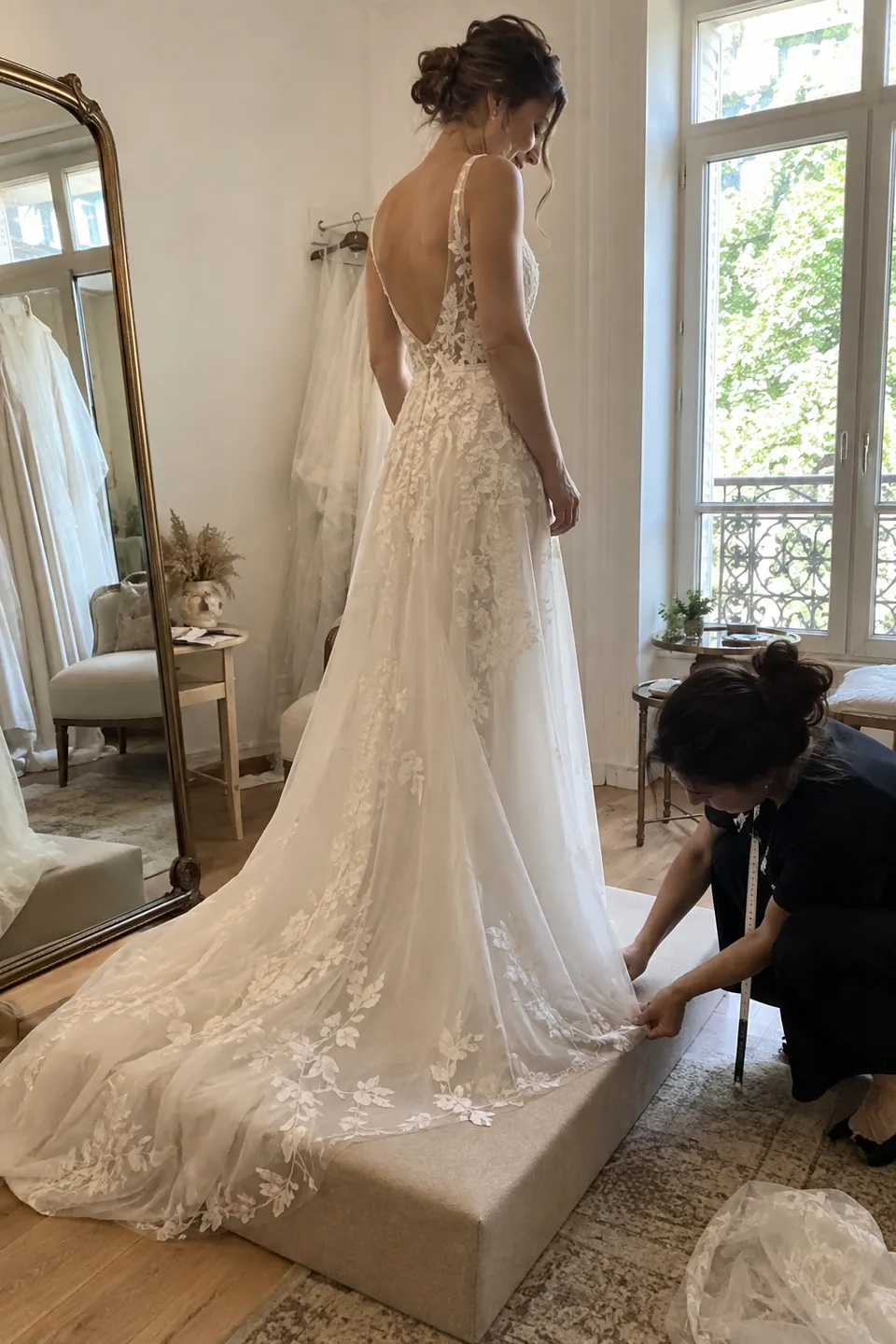
A typical bridal alteration runs in stages. The seamstress needs the gown, your shoes and your undergarments at each fitting, because these change the length and the fit.
Fitting timeline
Count back from your wedding date.
Six months before
Choose the gown, get a written alteration estimate, and book the first fitting.
Four to six months before
First fitting: bring your shoes and undergarments. The main changes are marked.
About three months before
Second fitting: confirm the changes and check the hem with the final shoes.
Four to six weeks before
Final fitting: check the bustle, the veil attachment and any last adjustments.
One week before
Collect the gown, steam it lightly and check that every piece is with it.
Within six weeks after
Professional cleaning, then acid-free storage.
Most brides book the first fitting four to six months before the wedding. Lace, beading and complex bustles take longer, and seamstresses often have waiting lists in the months before peak season.
Which changes are hard to make?
Some changes are routine. Others limit what can be done with the gown afterwards:
- Bust: taking in is possible, letting out is often limited by the seam allowance and the lace.
- Hips: letting out depends on how much fabric is in the seam. Fitted mermaid and sheath styles have little room to change.
- Length: shortening is simple, lengthening can be impossible if the hem has no spare fabric.
- Beading and lace: removing beads to alter a seam is time consuming and can leave marks.
If the gown needs major changes to the bodice and the hips at once, ask whether a different size would be easier to alter. Sometimes a larger size taken in gives a better result than a smaller size let out.
How to save money without cutting corners
Ask for the alterations you actually need. A good seamstress will tell you which changes are worth doing for the look you want, and which are only cosmetic. Bring your shoes to every fitting. Ask for a single hem fitting after the shoes are final, because a hem set in flat shoes is often wrong by the wedding day.
Compare two or three seamstresses. Look at their finished gowns in photos, ask about their experience with the fabric you have, and check their reviews and how long they have worked with bridal gowns. A seamstress who works mainly on everyday clothing may not know how to handle lace or boning.
What to ask before you book
- Do you handle bridal gowns with lace, beading or boning?
- How many fittings do you usually need for this type of gown?
- Is the price fixed, or does it change if the fabric needs more work?
- What is your deadline, and what fee applies if I am late?
- Do you clean or steam the gown before you return it?
Plan the timing around the wedding
Work backwards from the date. Allow time for the gown to arrive, for the first fitting, for the main alteration, for a second fitting, and for a final check the week before. Keep a spare week for unexpected problems such as a torn seam.
If you are buying a gown that already needs work, ask the seller or a seamstress to estimate the cost before you commit. The total of the gown plus alterations is what you are really paying, which is why the budget planner includes an alterations line.
What a seamstress needs from you
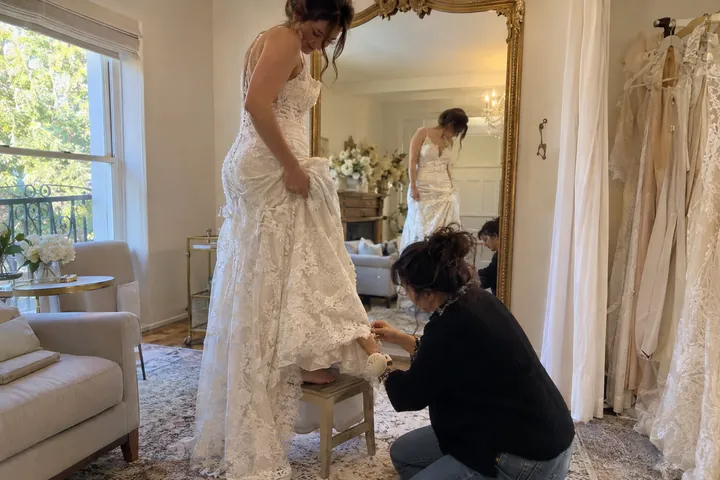
A seamstress can only fit what you bring to the room. At the first visit, bring the undergarments and the shapewear you plan to wear, because they change the line of the bodice and the waist. Bring the shoes, and if you have a veil, bring it too, since the veil's weight can shift the bodice on your shoulders.
Tell the seamstress what you expect from the gown. Some brides want it to feel close to the body, others want more room to breathe and dance. The seamstress can usually adjust the fit to match, but the decision needs to be made before the final fitting, not after.
Keep a record of each fitting: the date, the changes made, the price and the next appointment. If you change your mind about a job, ask the seamstress to tell you the cost before continuing, so there are no surprises on the final bill.
Plan for the surprises
Alterations are one of the places where costs rise without warning. A seam that looks sound may tear once the bodice is pinned, or a lining may need replacing once the original is cut away. A common planning rule is to add a margin of about 10 to 15 percent to the estimate for unexpected repairs. If the estimate is 600 dollars, keep 660 to 690 dollars aside.
Ask the seamstress to call you before any work that goes beyond the written estimate. A good seamstress will explain the reason, show you the problem and give you a revised price before continuing.
When alterations are not worth it
Sometimes a gown should not be altered at all. If the bodice is far too small across the bust, if the neckline is cut in a way that cannot be changed, or if the fabric is too fragile to take new seams, the cost of alteration can exceed the value of the gown. In that case, compare the cost of a different size or a different gown with the cost of the alterations, and decide with the full numbers in front of you.
Reading a written estimate
A written estimate should list each job on its own line, with a price or a range for each one. Check that the estimate says whether it includes materials such as thread, zips, hooks and lining, and whether it includes the final press or steam. If the estimate says "alterations, approximately", ask which jobs are fixed and which may change once the gown is pinned.
Ask how the seamstress charges for extra fittings. Some include two fittings in the price and charge for each additional visit, while others charge by job regardless of the number of visits. Both can be fair, but they lead to different final bills, so compare the two structures before you choose.
Frequently asked questions
How much does it cost to hem a wedding dress?
A hem usually costs between 75 and 250 dollars, depending on the lining, the number of tulle layers and whether the hem is hand finished. Ask for a fixed price.
How long before the wedding should I start alterations?
Book the first fitting four to six months before the wedding, and allow more time for lace, beading and a complex bustle.
Should I wear my shoes to the fittings?
Yes. Bring the shoes you plan to wear, because the heel height changes the correct hem length.
Are alteration prices negotiable?
Sometimes, especially for a bundle of jobs. The bigger issue is getting a written estimate that lists every job before any work starts.
Can a gown be altered more than once?
Yes, but each change uses up seam allowance and fabric. Plan the changes together where possible, and avoid taking in and letting out the same seam.
Keep reading
Buying guide
How to Buy a Used Wedding Dress, Step by Step
Buying a used wedding dress? Check the condition, confirm the fit and history, judge the price fairly and ask the right questions before you pay.
7 min read
Budget
Wedding Dress Budget: How to Split the Money Wisely
Plan a wedding dress budget that covers the gown, alterations, veil, shoes, undergarments and a contingency, with a simple split you can adjust.
6 min read
Prom and formal
Prom and Formal Dress Sizing: How to Measure and Choose
How to measure yourself for a prom or formal dress, read a size chart correctly, choose between sizes and decide when alterations make sense.
6 min read