Budget
Wedding Dress Budget: How to Split the Money Wisely
Plan a wedding dress budget that covers the gown, alterations, veil, shoes, undergarments and a contingency, with a simple split you can adjust.
In this guide
- Start with the total you can afford
- Use a simple split as a starting point
- Why the alterations line matters
- Accessories are where budgets creep
- Plan the cleaning and preservation
- Build in a contingency
- Ways to reduce the total without cutting quality
- Check the budget against the real totals
- A worked example for a 3,000 dollar outfit
- When to spend more and when to save
- How to track the budget
- Buying in stages without paying twice
A wedding dress budget should cover the whole outfit, not just the gown. Most brides who go over budget do so on alterations, accessories and last-minute repairs, not on the gown itself. Set a total, split it across the categories below, and keep a contingency line for the surprises that always arrive.
Start with the total you can afford
Decide the total you can spend on the outfit before you look at any gowns. Take into account what you already have, what family members may contribute, and how much you want to keep for other wedding costs. Separate the outfit budget from the venue, catering and photography budgets so the dress does not eat them.
It helps to write the total down with a date. Review it once a month. A budget you check is more likely to hold than one that lives only in your head.
Use a simple split as a starting point
The split below is a planning default, not a rule. Change the percentages to match your priorities. A bride who plans a complex alteration may give more to that line, and a bride who buys a gown ready to wear may give more to accessories.
- Gown: about 40 percent
- Alterations: about 15 percent
- Veil and jewellery: about 12 percent
- Shoes: about 8 percent
- Undergarments and shapewear: about 7 percent
- Cleaning, steaming and preservation: about 4 percent
- Contingency: about 14 percent
Budget split
Edit the percentages and the total. The split is a planning default.
| Category | Share | Amount |
|---|---|---|
| % | ||
| % | ||
| % | ||
| % | ||
| % | ||
| % | ||
| % | ||
| Total |
Why the alterations line matters
Alterations are the most common surprise. A gown that looks perfect on the hanger often needs changes at the bust, hem and waist, and a bridal seamstress may charge more for lace, beading and lining work. The alteration cost guide lists typical ranges for common jobs.
If the gown needs more than 300 dollars of alterations, ask whether a different size or a different style would cost less overall. A cheaper gown with a higher alteration bill is not always the better deal.
Accessories are where budgets creep
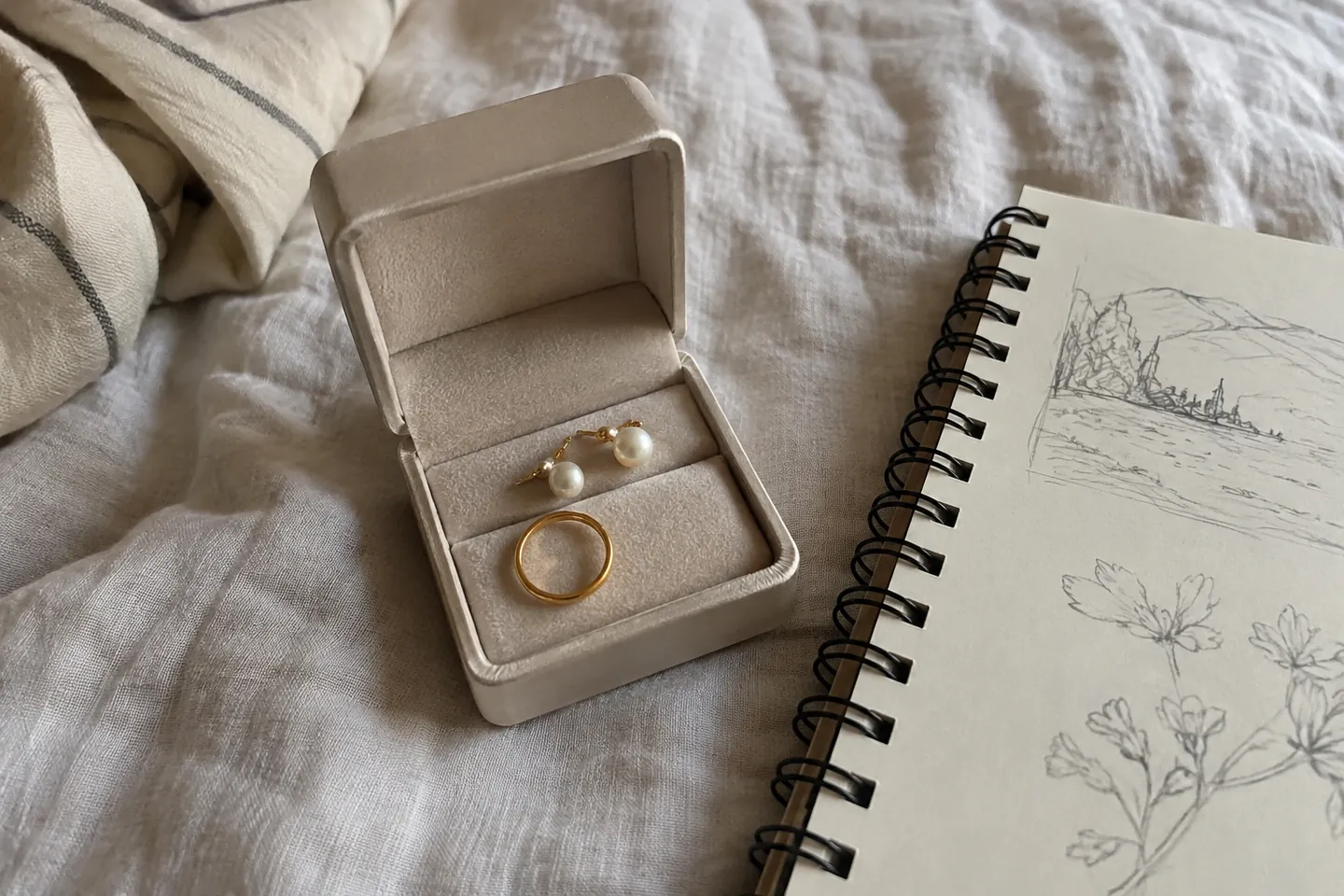
A veil, a headpiece, earrings, a belt and shoes can add several hundred dollars quickly. Set a limit for accessories before you go shopping, and buy the most visible pieces first. The veil and the shoes are seen in every photo, so they often deserve more of the budget than a second pair of earrings.
Check whether the shoes need to be dyed to match the gown. Dyeing shoes costs money and time, so buy ivory shoes that match the fabric if you can.
Plan the cleaning and preservation
A wedding gown should be cleaned by a professional after the day, ideally within a few weeks. Cleaning costs vary, and the stains from the day can be harder to remove if they are left. Budget for cleaning and for a proper storage box or garment bag as well.
Build in a contingency
A contingency of around 10 to 15 percent covers the surprises: a torn seam, a change of shoes, a last-minute steaming, or a tailor who needs an extra fitting. If you do not need it, it becomes a cushion for the rest of the wedding costs or for the honeymoon.
Ways to reduce the total without cutting quality
- Buy a gown in good condition from a reputable consignment shop or a verified private seller
- Choose a silhouette and fabric that need fewer alterations
- Ask for a single bundled alteration quote instead of paying for each job separately
- Reuse a veil or jewellery from a family member if it suits your look
- Compare shoes from several makers, and buy the most comfortable pair you can afford
Check the budget against the real totals
Before you buy, add up the gown price, the alteration estimate, the veil, the shoes, the undergarments and the cleaning. Compare the total with your outfit budget. If it is over, reduce the least important line first. The gown should be the line you are happiest with, not the one you have to fight for.
A worked example for a 3,000 dollar outfit
The table below shows the default split applied to a total of 3,000 dollars. It is a planning example, not a recommendation for every couple. Change the figures to suit your region and your priorities, and keep the total the same so you can see where the money moves.
| Category | Share | Amount (USD) |
|---|---|---|
| Gown | 40% | 1,200 |
| Alterations | 15% | 450 |
| Veil and jewellery | 12% | 360 |
| Shoes | 8% | 240 |
| Undergarments and shapewear | 7% | 210 |
| Cleaning, steaming and preservation | 4% | 120 |
| Contingency | 14% | 420 |
| Total | 100% | 3,000 |
In this example, a used gown bought for 1,200 dollars leaves 450 dollars for alterations. If the alterations come in at 600 dollars, the contingency line absorbs most of the extra 150 dollars, and the total stays close to plan.
When to spend more and when to save
Spend more on the parts of the outfit that are seen in every photograph and that are hard to change later. The gown's fit and fabric, the shoes that set the hem, and the veil that frames the face are the usual priorities. Save on items that are easy to replace or that will be worn once, such as a second pair of earrings or a belt that can be bought used.
Do not save on undergarments and shapewear. A gown that fits well with the right underwear often needs fewer alterations, which can cut the total cost of the outfit.
How to track the budget
Keep one sheet with every quote, deposit and invoice. Update it after each payment, and compare the total committed with the total budget every month. When a figure goes over, move money from the least important line, and decide before you spend, not after.
Buying in stages without paying twice
Some costs must be paid in stages, and it is easy to pay twice by mistake. A gown deposit, a final balance, an alteration deposit and a cleaning fee can arrive in different months. Record the due date of each payment, and check each invoice against the estimate before you pay. If a seamstress asks for a second deposit before the first fitting, ask what the deposit covers and whether it is refundable.
Avoid paying for alterations before the gown is in your hands, unless the seller has agreed to it in writing. If the gown is unavailable or the sale falls through, a deposit paid to a third party can be hard to recover.
Frequently asked questions
How much should a wedding dress cost?
There is no single answer. The gown can cost anything from a few hundred dollars for a used or simple gown to several thousand for a designer piece. The total outfit should match your overall wedding budget.
Is 40 percent for the gown too much?
It is a common starting point, but it is only a guide. Lower it if you need money for other costs, or raise it if the gown is the centre of your plan.
Should I budget for alterations before I buy the gown?
Yes. Get an estimate for the changes the gown needs before you commit, because the alteration cost is part of what you are really paying.
What is a good contingency amount?
Ten to fifteen percent is a sensible range for most outfits. It covers small changes and last-minute fixes without tying up too much money.
Can I spread payments for alterations?
Ask the seamstress. Some take a deposit and the balance after the final fitting. Get the payment terms in writing before work starts.
Keep reading
Buying guide
How to Buy a Used Wedding Dress, Step by Step
Buying a used wedding dress? Check the condition, confirm the fit and history, judge the price fairly and ask the right questions before you pay.
7 min read
Alterations
Wedding Dress Alteration Costs and Timeline
How much wedding dress alterations usually cost, which changes are expensive, and how far ahead to book your fittings so the gown is ready on time.
6 min read
Accessories
Bridal Veil Lengths: Fingertip, Chapel, Cathedral and More
Bridal veil lengths explained, from fingertip and waltz to chapel and cathedral. Learn how to choose a veil that suits your gown, venue and height.
6 min read