Accessories
Bridal Veil Lengths: Fingertip, Chapel, Cathedral and More
Bridal veil lengths explained, from fingertip and waltz to chapel and cathedral. Learn how to choose a veil that suits your gown, venue and height.
In this guide
Bridal veil length sets the mood of the whole look, from a light, short veil for a relaxed day to a long cathedral veil for a formal church. Most veils are named by where they end: at the fingertips, the waist, the ankles, the floor, or beyond the gown's train. Choose the length first, then the style of the edge and the fabric.
The veil lengths and where they end
- Birdcage or blusher: a short veil that covers the face, often worn over a headpiece and lifted before the vows
- Shoulder or elbow: a short, soft veil that frames the shoulders and suits casual or modern weddings
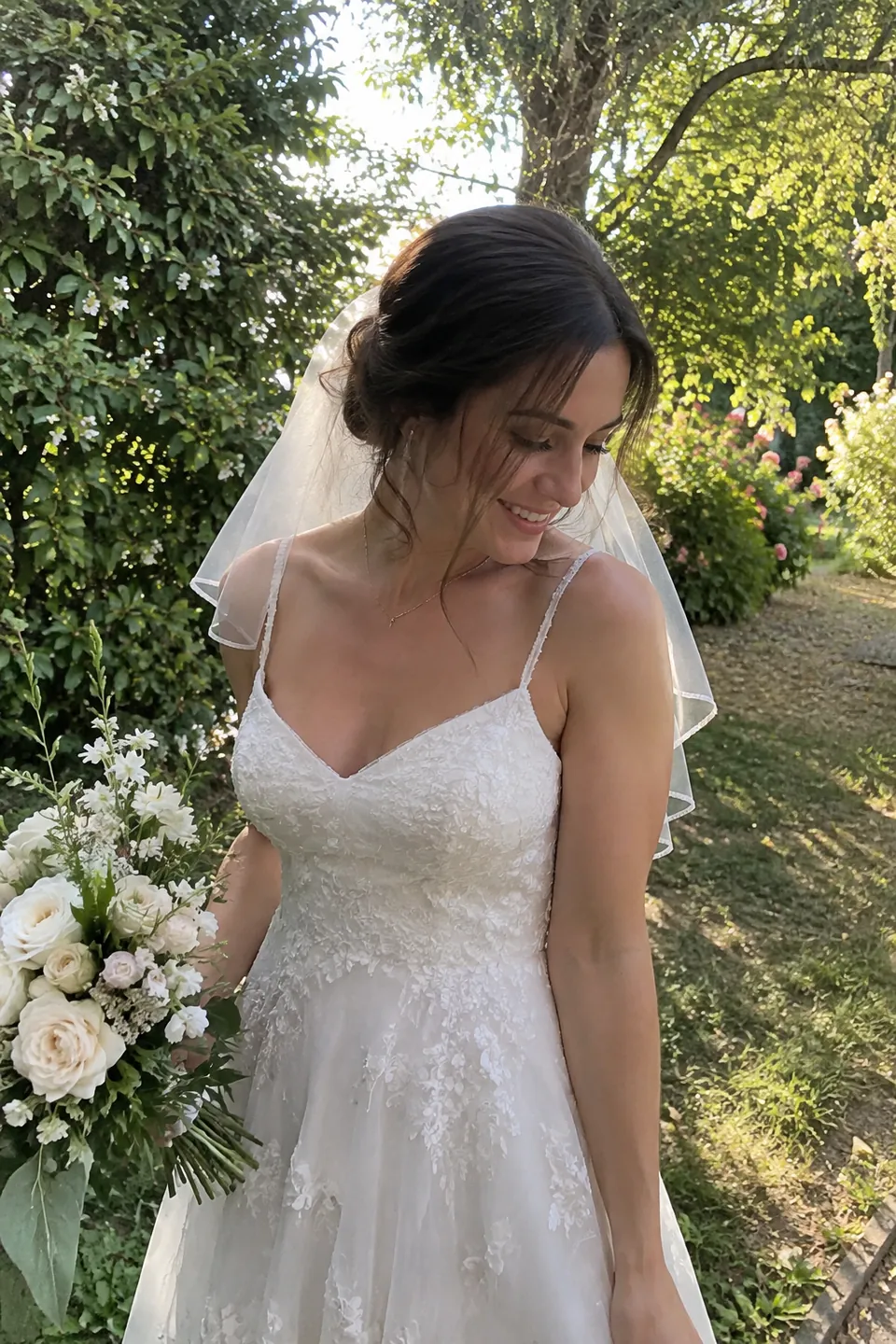
- Fingertip: ends where the fingertips land when the arms hang at the sides. Versatile and easy to carry
- Waltz: falls between the ankles and the calves. Elegant with an A-line or sheath gown
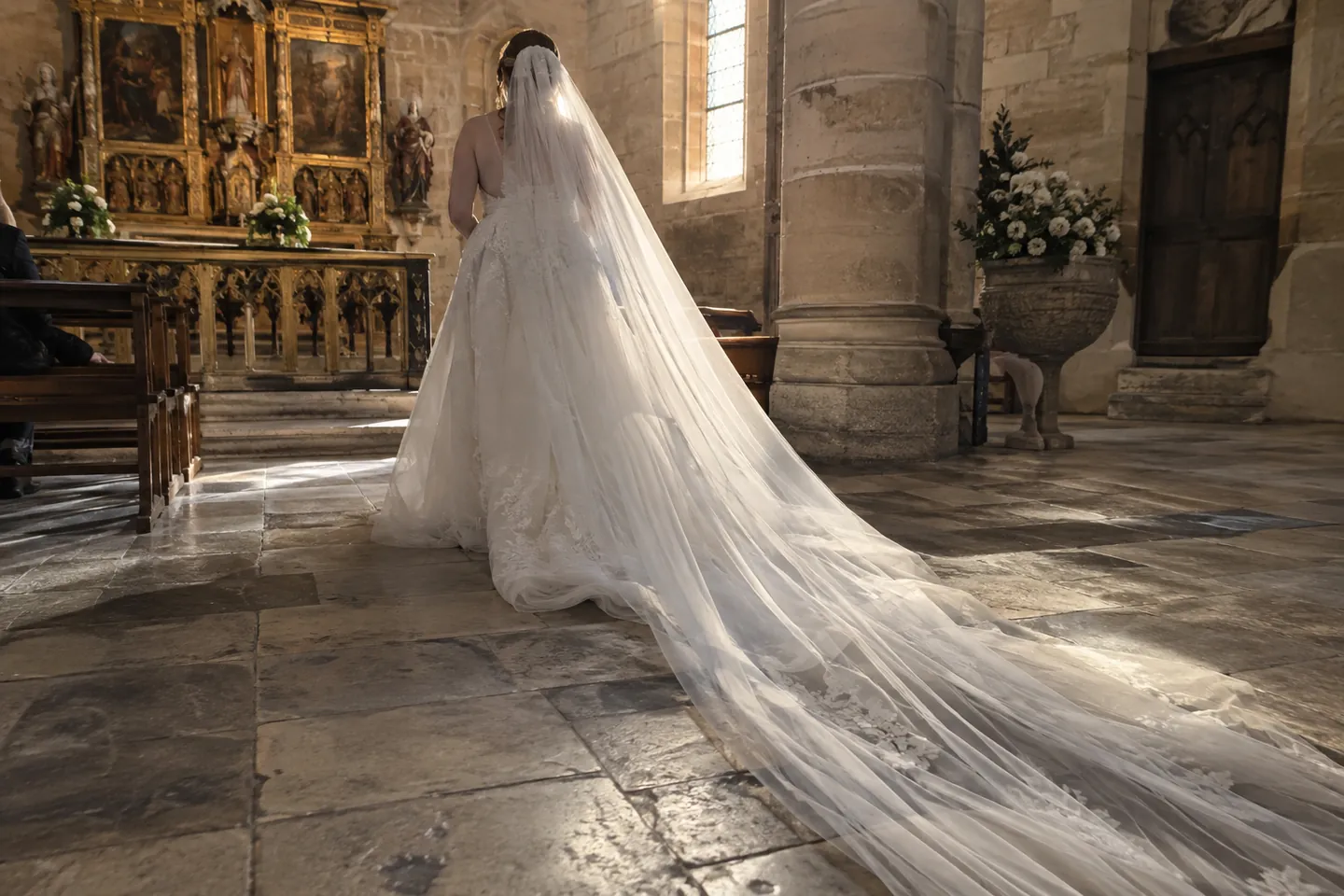
- Chapel: extends past the hem and onto the floor behind you, with a clear train. A classic choice for formal ceremonies
- Cathedral: the longest common length, reaching well beyond the train. Dramatic and best for large churches and grand venues
Lengths are approximate and vary between makers. Check the veil's total length in the seller's measurements, and hold the veil against your own body before you choose.
Match the veil to the gown
The veil should support the gown, not compete with it. Long veils work best with simple lines and a clean neckline, so the veil frames the shape instead of covering the detail. A heavily beaded or lace gown often looks better with a shorter veil, or with a veil that has a lace edge that echoes the gown.
A ball gown carries a long veil well because the volume balances the skirt. A sheath or column gown can look overwhelmed by a cathedral veil, so a fingertip or waltz length is usually better. If your gown has a long train, a chapel or cathedral veil can make the back look dramatic when you walk down the aisle.
Pick the fabric and edge
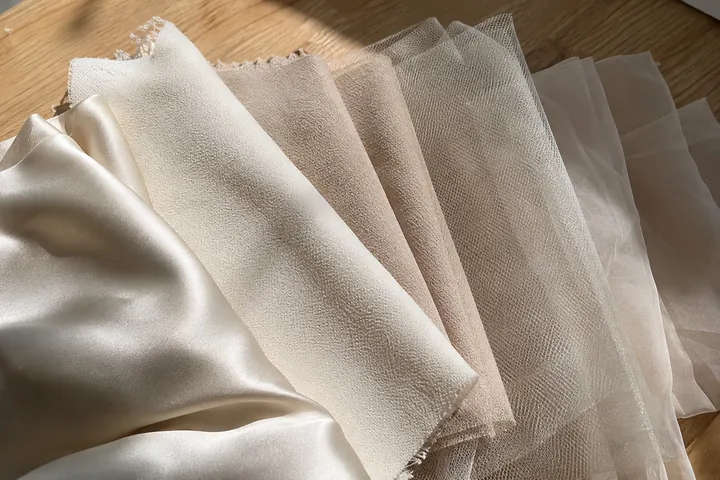
Tulle is the most common veil fabric. It is light, soft and easy to arrange. Silk tulle is finer and more fluid, but costs more. Organza gives a crisp, structured look and holds its shape in wind. Lace veils look romantic but weigh more and can catch on jewellery.
The edge matters as much as the length. A raw cut edge looks modern, a satin ribbon edge adds structure, and a lace-trimmed edge suits vintage or romantic gowns. Choose an edge that repeats a detail on the gown, such as the lace on the sleeves or the beading on the bodice.
Find your veil length
Answer three questions. The result is a starting point, so try the veil with your gown before you decide.
Answer every question to see your result.
Consider your height and the venue
Your height changes how a veil falls. A fingertip veil on a tall bride may look short, while the same veil on a petite bride can look long. Ask to try the veil with the shoes you will wear, because heel height changes where the veil hits the body.
Think about the venue too. Outdoor ceremonies with wind suit a shorter or heavier veil, or one with a comb that holds firmly. Indoor venues with a long aisle suit a chapel or cathedral length, because the veil can drift behind you as you walk.
How to wear and pin a veil
Pin the veil in two places: at the crown of the headpiece, and at the nape of the neck. Test the pins by moving your head, bending forward and sitting down. A veil that slides forward will cover your face at the wrong moment.
For a cathedral or chapel veil, ask the seamstress or a stylist to show you how to bustle it, or how to fold the veil back for the reception. Practise the change before the day, so you know how the veil comes off without damaging the comb.
Care and storage
Keep the veil in its box or a soft bag, flat, and away from light. Do not fold it sharply at the same place every time, because creases can stay in tulle. Steam the veil gently, or hang it in a steamy bathroom, before the wedding.
Store the veil with the gown if you plan to keep both. The preservation guide explains how to keep fabrics stable over the years.
Matching the veil to your hairstyle
Your hairstyle decides how the veil sits. An updo gives the veil a clear base, so a comb placed at the crown holds it securely. Loose waves or curls need a comb placed further back or a headband that grips the hair, otherwise the veil can slip forward. A low chignon at the nape is a good base for a long veil, because the veil falls straight from the back of the head.
Ask your stylist to pin the veil with you in place, on the day, or at the final trial. Hair that has been styled and sprayed holds a comb differently from hair that is freshly washed, so test the position at the same stage of preparation as the wedding day.
Practical details that change the look
Check the veil's comb and its attachment points. Plastic combs can snap, and metal combs can catch the lace of the gown. Ask for a spare comb or a second pin, and keep both in the emergency kit with the other items you will need on the day.
Consider how the veil will be removed for the reception. Many brides lift the veil after the ceremony and wear a headpiece or a short veil for the evening. Decide in advance which veil or accessories you will use, and make sure the change can be done quickly without damaging the hair.
Veil etiquette
There are no strict rules on veils, and most couples choose by taste. Traditional ceremonies often use a veil for the vows, and a blusher is lifted at a particular moment. If the ceremony has a set order or a religious tradition, ask the officiant or the venue whether there is a preferred practice before you decide.
Veil weight, fabric and comfort on the day
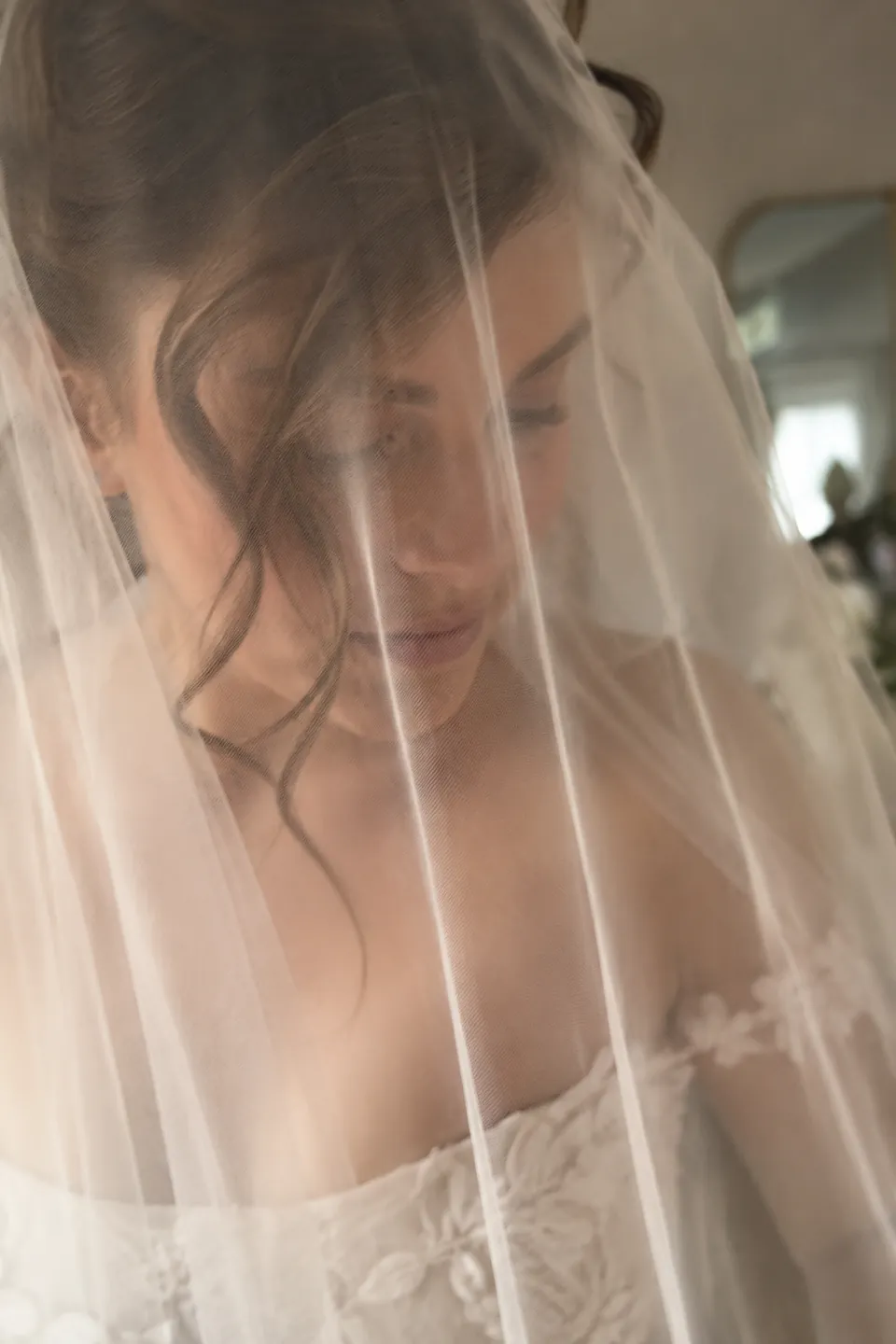
A veil that feels light in the shop can feel heavy after six hours. A single layer of fine tulle is the most comfortable choice for long days and outdoor weather. Two or three layers give more volume and a softer look, but they add weight at the crown and can press on the head. Try the veil on for at least thirty minutes, including a sit down and a short walk, before you decide.
Consider how the veil behaves in wind. A veil with a wide, unlined edge can lift and tangle in a breeze, so choose a narrower edge or a veil with a finished hem if the ceremony is outdoors. A cathedral length in wind needs more handling, so ask an assistant to hold the train for photographs.
Frequently asked questions
What is the most popular bridal veil length?
The fingertip veil is one of the most popular because it suits many gowns and venues and is easy to carry. Chapel and cathedral lengths are chosen for more formal ceremonies.
Can I wear a cathedral veil with a sheath gown?
It is possible, but the veil can overwhelm a narrow gown. A waltz or fingertip length usually balances a sheath or column better.
Should the veil match the gown colour?
Ivory veils suit ivory gowns, and white veils suit white gowns. Check the veil under daylight next to the gown, because artificial light can make ivory and white look very different.
How do I choose a blusher veil?
Choose a blusher if you want a face veil for the ceremony. Check that the fabric is light enough to see through and that it lifts easily.
Can a veil be reused on the day after the wedding?
Yes, if it was kept clean and undamaged. A veil reused as a keepsake or for another event should be inspected and steamed before it is stored again.
Keep reading
Style guide
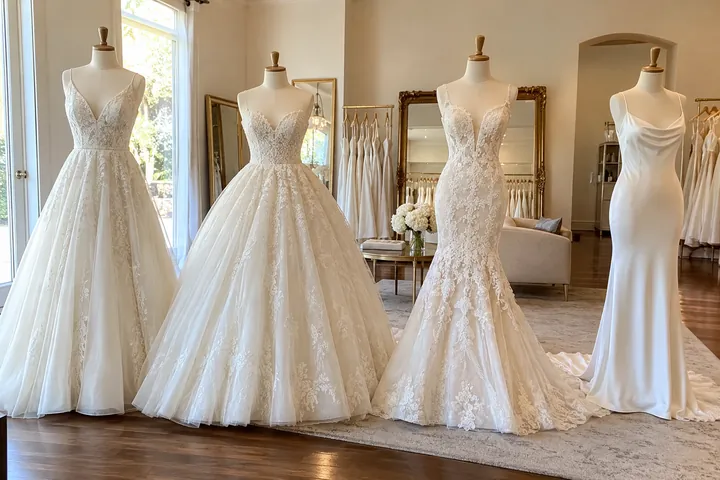
Wedding Dress Silhouettes: A-Line, Ball Gown, Mermaid and More
A practical guide to wedding dress silhouettes. Compare A-line, ball gown, mermaid, sheath and other shapes, and find the one that fits your venue and body.
6 min read
Fabrics
Wedding Dress Fabrics: Satin, Crepe, Tulle, Chiffon and Lace
Compare the main wedding dress fabrics, including satin, crepe, tulle, chiffon, organza and lace, by look, drape, comfort, care and cost.
6 min read

Care and storage
Caring for a Wedding Dress After the Wedding
How to clean, store and protect a wedding dress after the big day, including timing for professional cleaning, acid-free packing and what to avoid.
5 min read