Fabrics
Wedding Dress Fabrics: Satin, Crepe, Tulle, Chiffon and Lace
Compare the main wedding dress fabrics, including satin, crepe, tulle, chiffon, organza and lace, by look, drape, comfort, care and cost.
In this guide
- Compare the fabrics by what matters on the day
- Satin: classic shine
- Crepe: the forgiving choice
- Tulle: volume and softness
- Chiffon and organza: light and structured
- Lace: texture and detail
- Care, comfort and cost
- How to test a fabric before you buy
- Fabric for every season and venue
- How to test a fabric in the fitting room
- Fabric and the photographs
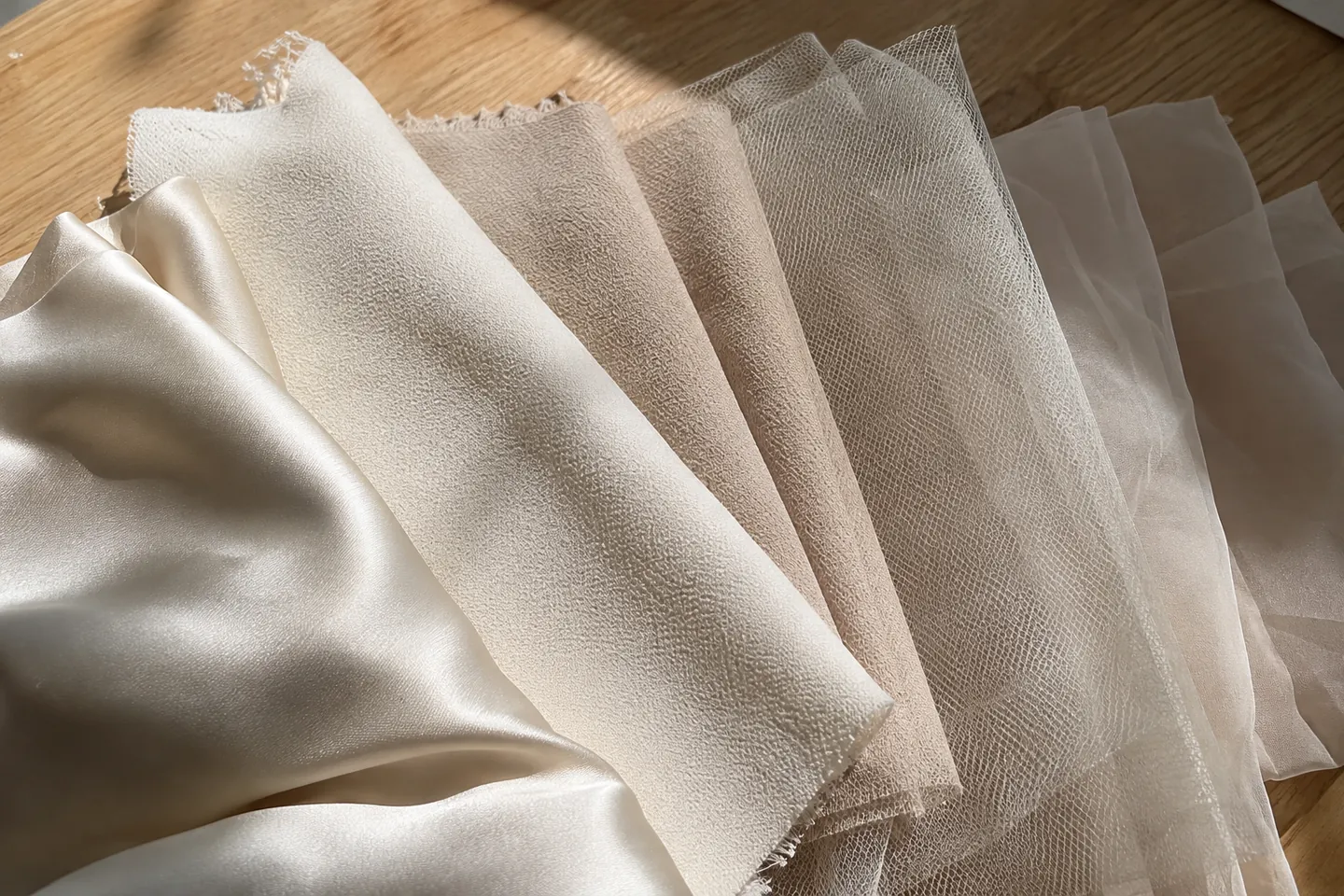
The fabric decides how a wedding gown moves, how it photographs, how warm it feels and how much care it needs. Satin shines and holds structure, crepe is matte and forgiving, tulle is airy, chiffon floats, and lace adds texture. Choose the fabric for the way you will spend the day, then choose the look.
Compare the fabrics by what matters on the day
| Fabric | Look | Drape | Comfort in heat | Care |
|---|---|---|---|---|
| Satin | Soft shine, smooth | Fluid, holds shape | Warm | Shows marks, wrinkles |
| Crepe | Matte, subtle texture | Structured but soft | Good | Forgiving, hides creases |
| Tulle | Sheer, airy, net-like | Light, puffy | Breathable | Snags, needs steaming |
| Chiffon | Sheer, floaty | Very fluid | Breathable | Fragile, shows movement |
| Organza | Crisp, sheer | Stiff, holds volume | Light | Keeps shape, creases easily |
| Lace | Textured, decorative | Varies with the net | Depends on weight | Delicate, can pull |
Fabric quick reference
Open a fabric to read how it behaves on the day.
Satin
Soft shine and clean lines. Duchess satin holds structure, charmeuse drapes. It shows marks and wrinkles, so store it flat.
Crepe
Matte with a subtle texture. It holds its shape without stiffness and hides creases, which makes it forgiving for a long day.
Tulle
A fine net that creates volume in skirts and veils. Silk tulle is softer than nylon. It snags, so keep it clear of rough surfaces.
Chiffon
Sheer and floaty, good for garden and beach weddings. It is fragile and moves with every breeze.
Organza
Crisp and sheer, holding volume without a heavy petticoat. It creases easily and needs gentle steaming.
Lace
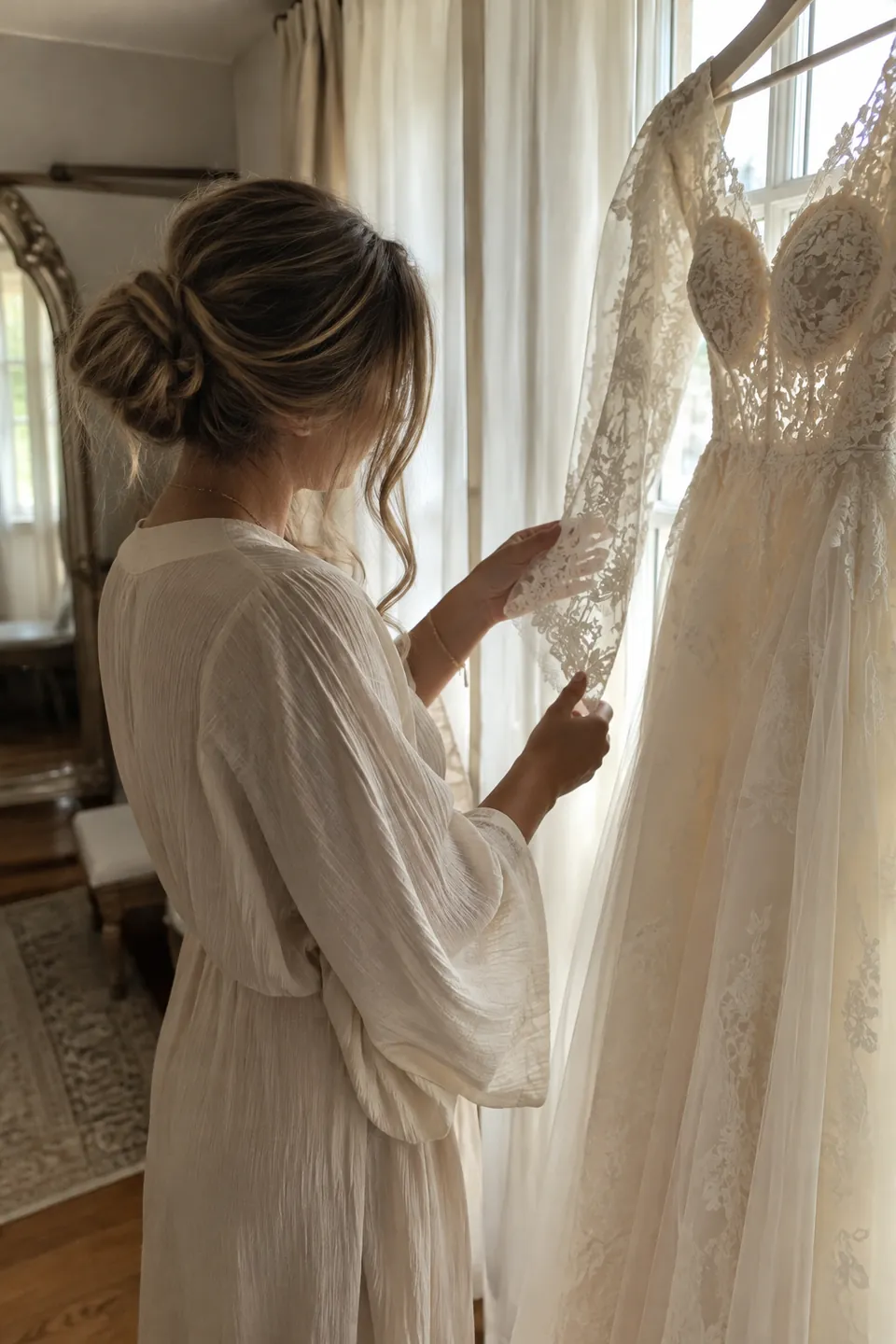
Decorative and textured. Chantilly is fine, Alençon has raised motifs and beaded lace is heavier. Check how it is attached to its base.
Satin: classic shine
Satin reflects light, which gives it a luminous look in photos and in candlelit venues. Duchess satin is heavier and holds structure, which suits a ball gown or a sculpted mermaid. Charmeuse is lighter and drapes well, which suits a slip-style or column gown.
Satin shows every mark, and it can look creased after a long day. Ask for a gown in satin to be cleaned and stored flat in a box, and steamed gently rather than ironed.
Crepe: the forgiving choice
Crepe is matte and has a subtle texture. It holds its shape without stiffness, and it hides small creases and movement lines better than satin. Many brides choose crepe for a sheath or a clean A-line, and for outdoor weddings where the gown will be sat on, carried and hugged.
Check the weight. Heavy crepe can feel warm in a summer garden, while a lighter crepe with a lining moves more easily.

Tulle: volume and softness
Tulle is a fine net. It creates volume in ball gowns and veils, and it can be layered to give a soft, airy skirt. Silk tulle is finer and softer against the skin than nylon, and it costs more.
Tulle snags on rough surfaces, jewellery and shoes, and it can trap dust. Keep the skirt covered when you move around, and ask for a bustle or a short train if the skirt drags.
Chiffon and organza: light and structured
Chiffon is sheer and floaty. It suits beach, garden and destination weddings, and it moves beautifully in a breeze. It is fragile, so choose it only if you are comfortable with a gown that needs careful handling.
Organza is crisp and sheer, with a structure that holds volume without a heavy petticoat. It creases easily, so store it flat, and steam it gently before the day.
Lace: texture and detail
Lace is a decorative fabric made of patterns in a net or mesh. Chantilly lace is fine and delicate, Alençon lace has raised motifs, and guipure lace is heavier with a bold pattern. Beaded lace is heavier and needs careful handling, because the beads can catch on each other.
Lace is often layered over satin, crepe or tulle. Check how the lace sits on the base fabric, and whether it is attached only at the seams. A lace that lifts or pulls will not be fixed by a seamstress without visible repair.
Care, comfort and cost
Fabric is one of the main drivers of cost. Silk satin, silk tulle and high-quality lace cost more than polyester blends, and they often look better in photos. Polyester can look good and is easier to clean, but it can feel warmer and may not drape as well.
Think about the day. If the ceremony is outdoors in summer, choose breathable fabrics such as crepe, chiffon or lightweight tulle with a cotton or silk lining. If the venue is indoors and cool, satin or heavier lace feels luxurious.
How to test a fabric before you buy
Ask to see the gown in daylight, and feel the fabric near the seams and the hem. Look at how the light falls across the skirt. Take photos from the side and back, because satin and chiffon change look as you move.
Compare two fabrics against the same silhouette. Hold a swatch of each against the bodice in the mirror, and check the colour under both daylight and warm indoor light, because ivory can turn yellow or grey under some bulbs.
Fabric for every season and venue
Season and venue change the choice more than the style does. A winter church wedding suits satin, heavy crepe and lace with a lining, because the fabric holds warmth and gives structure against cold stone. A summer garden wedding suits crepe, lightweight tulle and chiffon with a breathable lining, because heat builds quickly under dense fabric. A beach wedding asks for fabrics that resist wind and sand, so a sheath or column in crepe, or a light chiffon with a firm hem, is more practical than a heavy ball gown.
If the ceremony is indoors and the reception is outdoors, choose a fabric that can move between the two. A crepe gown with a removable overskirt or a satin gown with a lighter tulle layer gives options without a second outfit.
How to test a fabric in the fitting room
Ask for ten minutes alone with the gown in natural light. Sit down on a chair, then stand and walk. Watch how the fabric creases at the knee and hip, and whether it springs back. Raise your arms and reach forward to see whether the bodice pulls or whether the lace lifts away from the lining.
Feel the fabric against your skin on the inside, because many gowns look smooth outside and scratch inside. If the lining is itchy, ask about a different underlining, or wear a soft slip under the gown on the day.
Test the fabric for transparency. Hold a corner of the skirt against a window. If the light shows your undergarments clearly, you will need a slip or a different colour of lining.
Fabric and the photographs
Photographers light the scene for faces and skin, not for fabric. Satin reflects strong flash and can look blown out, while matte crepe holds detail in harsh light. Tulle picks up backlight beautifully, and lace shows its pattern best against a plain background. Ask your photographer how they plan to shoot the gown, and choose a fabric that will look right in the light you expect.
Frequently asked questions
Which wedding dress fabric is the easiest to care for?
Crepe is often the easiest. It hides creases and resists wrinkles better than satin, and it keeps its shape well after a long day.
Is satin a good choice for a summer wedding?
It can be warm. A lighter satin or a satin with a breathable lining is more comfortable. Consider crepe or chiffon if the venue is hot.
Can tulle be cleaned at home?
Tulle is delicate and should be cleaned by a bridal specialist or a dry cleaner who handles net fabrics. Spot cleaning is risky because the fine net can snag or lose its shape.
Which fabric looks most romantic in photos?
Chiffon and tulle give a soft, flowing look, while satin gives a luminous look. Lace adds texture that photographs well up close.
Does a polyester gown look cheap?
Not necessarily. A well-made polyester gown can look elegant. Check the drape and the weight in person, because cheap fabrics often look flat or stiff.
Keep reading
Style guide
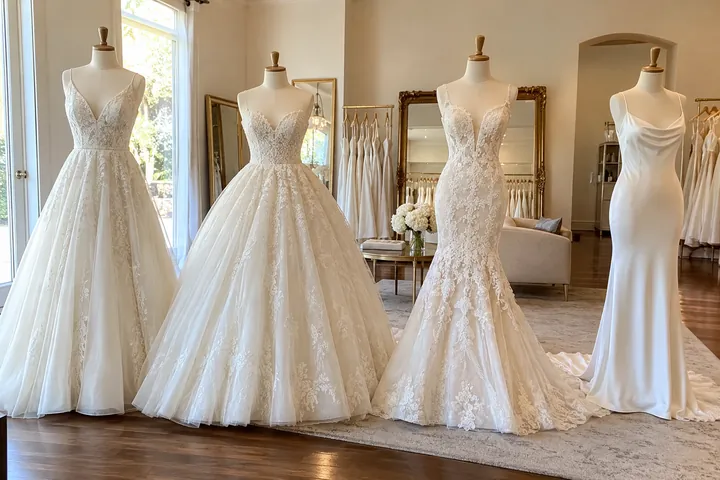
Wedding Dress Silhouettes: A-Line, Ball Gown, Mermaid and More
A practical guide to wedding dress silhouettes. Compare A-line, ball gown, mermaid, sheath and other shapes, and find the one that fits your venue and body.
6 min read
Prom and formal
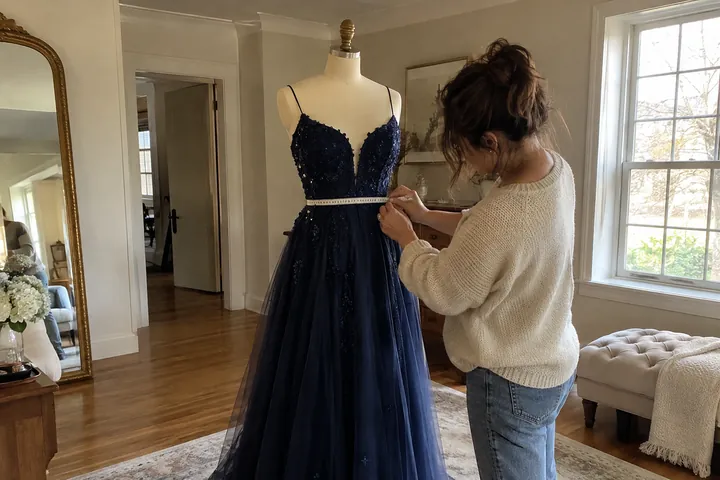
Prom and Formal Dress Sizing: How to Measure and Choose
How to measure yourself for a prom or formal dress, read a size chart correctly, choose between sizes and decide when alterations make sense.
6 min read
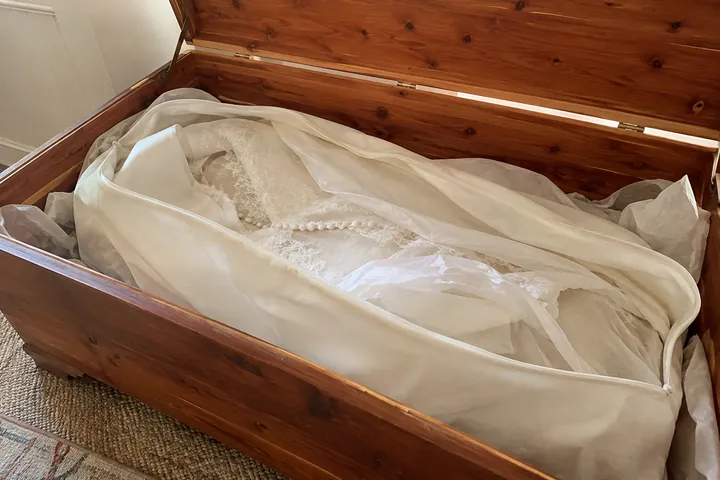
Care and storage
Caring for a Wedding Dress After the Wedding
How to clean, store and protect a wedding dress after the big day, including timing for professional cleaning, acid-free packing and what to avoid.
5 min read